
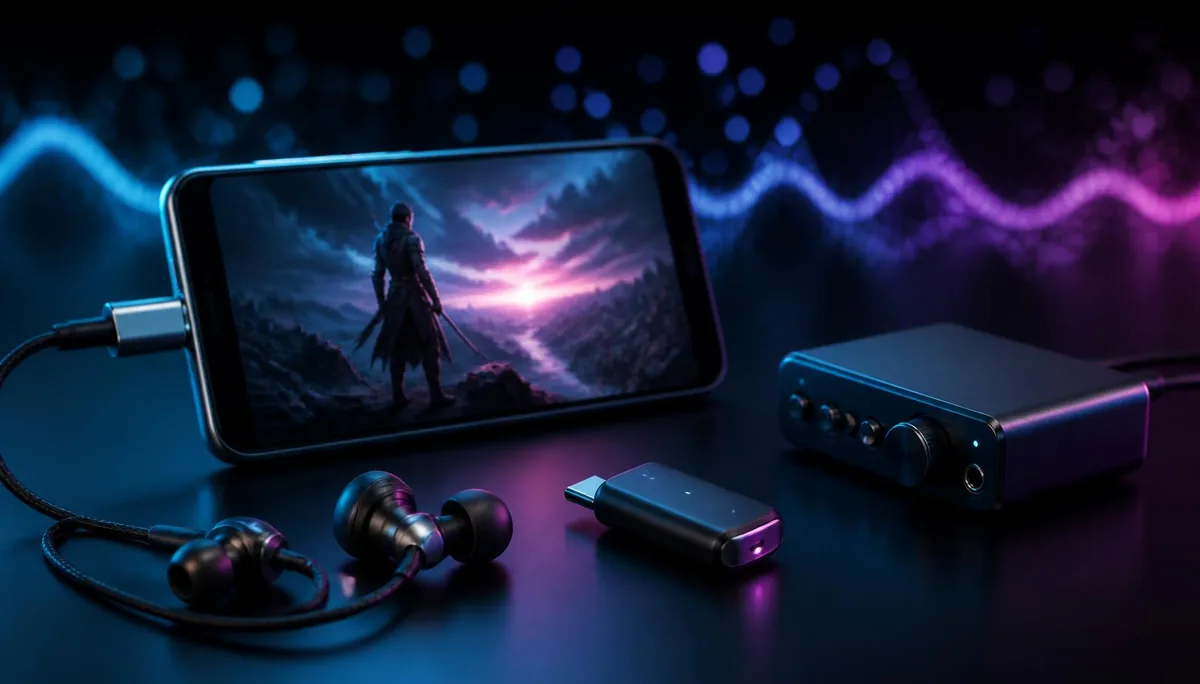
Mobile game chat has become as important as the game itself. Whether you are calling shots in PUBG Mobile, coordinating a heist in GTA Online, or just trying to sound different in a Fortnite lobby, the device that changes your voice matters more than the app you open. That is because most mobile apps cannot alter audio once it is already inside the phone. The best voice devices solve the problem upstream, converting your voice before it ever reaches the handset.
This comparison ranks five hardware approaches that mobile gamers actually use. We cover all-in-one earbuds, compact dongles, Bluetooth mixers, portable audio interfaces and gaming headsets with built-in effects. The goal is not to crown a single winner for everyone; it is to match each category to the setup it fits best.
The best mobile gaming voice device is the one that changes your voice before the phone has to think about it. Everything else is a question of how many cables and apps you are willing to manage.
What mobile gamers need from a voice device
A great mobile gaming voice changer is not the one with the most voices. It is the one that stays out of the way while you play. Four things decide whether a device earns a place in your bag.
- Low latency: anything above a few hundred milliseconds turns callouts into an awkward echo.
- Wide compatibility: the device should feed any app that uses the phone's microphone, not just one game.
- Portability: couch gaming and travel reward small, battery-friendly gear over rack-sized boxes.
- Audio quality: the voice effect should be intelligible, not just loud.
Keep those four in mind while reading the rankings. A device that scores well on one criterion and poorly on another is not necessarily bad; it is just aimed at a different kind of player.
How we picked and ranked these five devices
The list below is built around categories of hardware rather than individual SKUs. Prices, firmware versions and retailer availability change too quickly to pin a review to a single model number. Instead, we describe how each category behaves, what it requires, and where it falls short. When a specific product is mentioned, it is one we make or use ourselves and disclose accordingly.
We also avoid star ratings and recommendation percentages. Those numbers look authoritative but age badly, and they rarely capture the difference between a device that is perfect for a sofa gamer and one that is perfect for a mobile streamer. The rankings below reflect real-world fit, not a synthetic score.
1. Dubbing AI Voice Changing Earbuds
The Dubbing AI Voice Changing Earbuds put a real-time voice processor inside a pair of wired in-ear headphones. You plug them into the phone, open the companion app, pick a voice and start talking. Every app that reads audio from the phone's microphone input hears the converted voice, which covers PUBG Mobile, Fortnite Mobile, Discord, WhatsApp, Roblox Mobile and most streaming apps.
The earbuds handle conversion in the hardware itself, so the phone does not need a virtual audio driver, a jailbreak or a system-wide plugin. Latency is around 300 ms, and the voice library holds 500+ presets as of 2026. The same pair works with Android and iOS, which is useful if you switch phones or share gear with friends.
- All-in-one: earphones, microphone and voice processor in one cable.
- Works in any app that uses the standard phone mic input.
- No computer, interface or external power supply required.
- Voice switching happens in the companion app, not inside each game.
Good fit if
You want a pocketable device that works across games and calls without chaining extra boxes together. Our dedicated PUBG Mobile walkthrough and Fortnite Mobile guide show exactly how that looks in two popular titles.
Limitations to know
The earbuds are a physical product you have to carry and keep charged. Console support for PS5, Xbox, Switch 2 and VR headsets is planned for late August 2026 rather than available today. If your main goal is console voice chat, that date is worth waiting for before buying.
2. USB-C voice changer dongle
A USB-C dongle sits between your existing headphones and the phone. It receives your microphone signal, applies a voice effect and passes the changed audio to the handset. The form factor is tiny, and it lets you keep the headphones you already own.
The catch is usually the control surface. Dongles have limited buttons, so browsing voices or adjusting effect strength often means tapping through a small LED menu or using a companion app. Latency varies by chipset, and not every dongle reports a real number, so you may need to test it in your actual game before trusting it for ranked play.
Good fit if
You already own comfortable gaming earphones and just want a small adapter that adds voice effects. It is a modular approach, but modularity adds steps every time you switch games or voices.
3. Bluetooth audio mixer / voice modulator
Bluetooth mixers are portable boxes that pair with your phone and your headphones, then overlay effects on the microphone path. They appeal to people who want wireless freedom and sometimes want to mix in background music or soundboard clips alongside their changed voice.
The wireless link is both the selling point and the weakness. Bluetooth adds its own latency on top of the voice processing, which can push total delay past what competitive game chat tolerates. Battery management also becomes a factor: you are now keeping the mixer, the phone and your headphones charged.
Good fit if
You value a cable-free setup more than the lowest possible latency, or you want a single box that handles voice effects, music and monitoring at a party or casual stream.
4. Portable audio interface + mobile app combo
A portable audio interface turns your phone into a miniature recording studio. You plug a microphone into the interface, run a voice changing app on the phone, and route the processed audio back out to the game or chat app. This path gives you the most control over EQ, compression and effect chains.
It is also the most work. You need the interface, a microphone, the processing app, and a way to route audio between apps on a mobile OS that does not make routing easy. The result can sound excellent, but the setup time is measured in hours, not minutes.
Good fit if
You are a mobile streamer or podcaster who already owns an interface and microphone, and you want studio-style control over your voice chain.
5. Gaming headset with built-in voice effects
Some gaming headsets ship with a handful of voice effects accessible from a button on the ear cup. The convenience is obvious: one device, no dongles, no apps to open. You put it on and press a button to sound like a robot or a giant.
The downside is flexibility. The effect library is usually small and fixed, and the headset may only apply the effect to its own output or to a companion app rather than to every app on the phone. Latency is rarely advertised, and the microphone quality can be secondary to the lighting and branding.
Good fit if
You want a simple, no-fuss effect for casual lobbies and you do not need hundreds of voices or cross-app compatibility.
Side-by-side comparison
| Voice changing earbuds | USB-C dongle | Bluetooth mixer | Audio interface + app | Gaming headset | |
|---|---|---|---|---|---|
| Works live in any app | Yes | Usually | Usually | Yes, with routing | Limited |
| Needs extra gear | No | Your own headphones | Mixer + headphones | Interface + mic | No |
| Needs a computer | No | No | No | No | No |
| Latency | ~300 ms | Varies | Higher (BT + processing) | Low to moderate | Rarely stated |
| Portability | Pocketable | Very small | Pocket-sized box | Bag-sized kit | Wearable |
| Voice library depth | 500+ | Small to medium | Small to medium | Depends on app | Small |
| Setup time | Minutes | Minutes | Minutes | Hours | Seconds |
| Best for | All-around mobile gaming | Modular add-on | Casual wireless | Mobile production | Casual effects |
Read the table from left to right as a spectrum. The earbuds and the headset are the simplest because everything is in one product. The dongle, mixer and interface give you more control but ask for more pieces and more patience.
Which device fits your setup?
The right choice is the one that matches where and how you play, not the one with the longest feature list.
- 1Play on a phone or tablet, move around, and want one cable that works everywhere — choose voice changing earbuds.
- 2Already own high-end in-ear monitors and just want voice effects on demand — a USB-C dongle is the smallest upgrade.
- 3Hate cables and mostly play casual games or chat at home — a Bluetooth mixer keeps the desk clean.
- 4Stream or record from a phone and already own pro audio gear — a portable interface gives the deepest sound control.
- 5Want a single button for occasional fun effects — a gaming headset with built-in voices is the easiest path.
If you are still weighing hardware against software-only solutions, our earbuds versus apps and PC voice changers breakdown explains why mobile apps alone cannot reach every game.
Final recommendation for mobile gamers
For most mobile gamers, the all-in-one approach wins. A device that combines earphones, microphone and real-time voice processing removes the cable salad and app routing that make other setups fragile. It also means you are not locked to one game: the same voice works in PUBG Mobile, Fortnite Mobile, Discord, WhatsApp or any future title that uses the standard phone mic.
Among the five categories, Dubbing AI Voice Changing Earbuds deliver the best balance of low latency, broad compatibility and portability for mobile play. They are not the only valid choice — a USB-C dongle or a gaming headset can be fine for narrower use cases — but they are the one we recommend first for anyone who wants real-time voice changing across mobile games and calls.
If you are building a mobile streaming rig, keep the portable interface on the list. If you only play at home and already own a good headset, the gaming headset route saves you a purchase. But for the player who wants one device that works in PUBG Mobile, Fortnite Mobile, Discord and ordinary calls, the all-in-one earbud approach is the cleanest answer.
Upgrade your mobile game voice
Real-time voice changing with 300 ms latency, 500+ voices and no extra gear.
Buy Dubbing EarbudsFrequently asked questions
Dubbing AI Team
Hardware & Voice AI
We build real-time voice changing hardware for gaming, streaming and calls.